
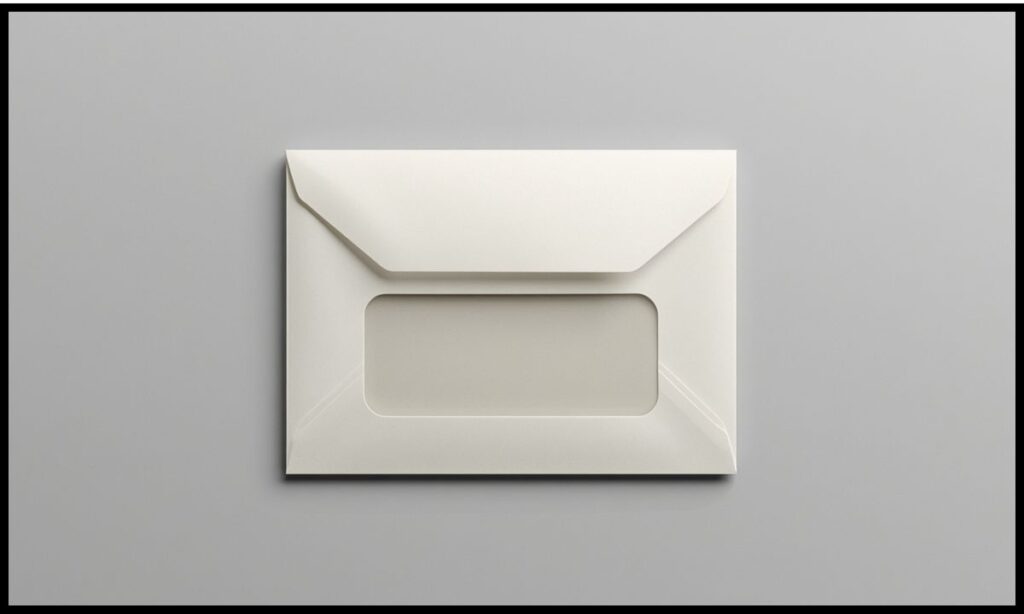
A small envelope window can look like a very ordinary rectangle, sitting quietly on the front of an envelope. Yet, that little rectangle has a surprisingly important job. Put it a few millimeters too high, too low, or too far toward the edge, and suddenly the address disappears behind the envelope flap, or worse, the printer puts your carefully arranged text somewhere it simply shouldnt be.
That is why understanding the DL envelope window size and position matters when you’re designing stationery, invoices, statements, business correspondence, or any document intended to arrive through the post. A correctly planned DL envelope makes the whole mailing process feel almost effortless.
The most familiar DL format measures 110 × 220 mm, or approximately 4 1/4 × 8 3/4 inches. It is a long, narrow European envelope size, commonly used with an A4 sheet folded into thirds. But the envelope itself is only half the story. If you’re working with a DL window envelope, you also need to understand the window dimensions, its distance from the edges, and the address layout inside the document.
What Is a DL Envelope?
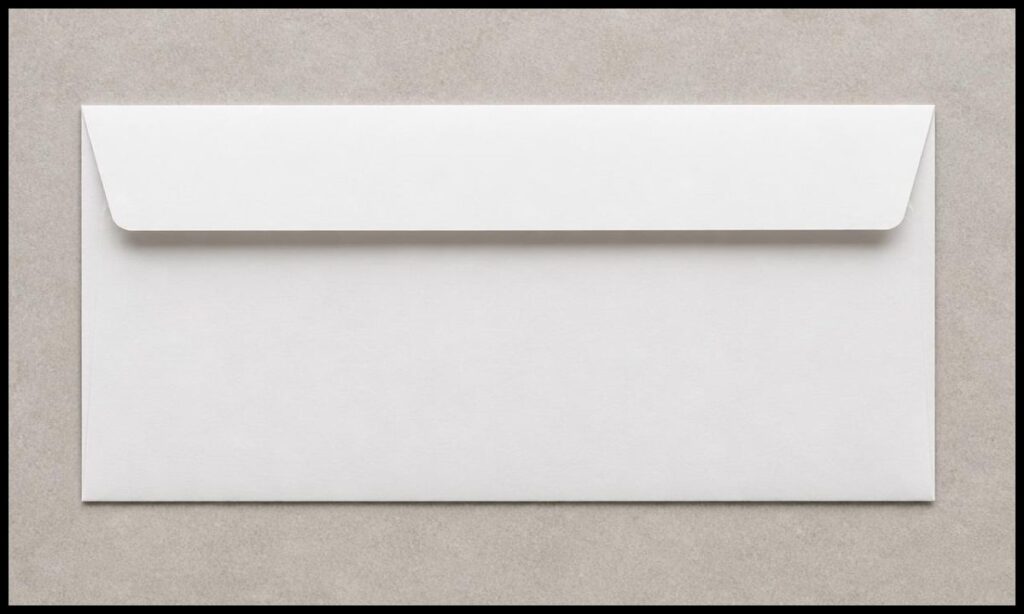
A DL envelope is a standard long-format mailing envelope designed primarily for business and everyday correspondence. Its typical DL envelope dimensions are 110 × 220 mm, giving it a distinctive landscape-like proportion when viewed from the front.
The name DL is associated with the European envelope sizing system, and the format is particularly convenient because a standard A4 sheet folded in thirds fits neatly inside. That simple folding arrangement is one reason the format became so familiar for letters, bills and office mail.
A DL envelope can be made with different envelope styles, flap shapes, papers and finishes. Some are plain, while others include a transparent address window, making them especially useful when large quantities of correspondence need to be prepared.
You may also see the DL format described as a DL standard envelope, DL mailing envelope, DL letter envelope, or DL business envelope. These expressions usually point toward the same general envelope format, although manufacturers can vary slightly in construction.
DL Envelope Size and Basic Dimensions
The standard DL envelope size is generally:
- 110 × 220 mm
- Approximately 4 1/4 × 8 3/4 inches
- Width: 220 mm
- Height: 110 mm
The exact manufacturing dimensions can sometimes vary by supplier, especially when comparing commercial products, custom stationery, or envelopes produced for particular postal systems. So, dont assume every envelope sold as DL will have identical construction.
The DL envelope dimensions make it particularly suitable for folded documents rather than bulky material. An A4 letterhead, invoice, statement, report or ordinary business letter can be folded into thirds and inserted without requiring an oversized envelope.
Another useful possibility is an A5 sheet folded in half lengthwise, although the actual document arrangement depends on the design and folding direction. The DL format is essentially about creating a compact mailing package from larger sheets of paper.
For designers, these dimensions should be treated as the starting point rather than the complete DL envelope layout. You still need to account for the flap, envelope opening, seal area, address zone and, when applicable, the transparent window.
DL Envelope Window Size and Position
The question people usually arrive here with is simple: What is the correct DL envelope window size and position?
For a commonly used UK-style DL window envelope, a frequently specified window measures approximately 93 × 39 mm. One commonly referenced placement is around 20 mm from the left and 53 mm from the top of the envelope.
In other words, the window is positioned so that the recipient’s address on the inserted document appears through the transparent section. The measurements are useful when preparing a DL envelope printing template, but they should not be treated as universal for every manufacturer.
A practical UK-oriented specification can therefore be summarized as:
- DL envelope dimensions: 110 × 220 mm
- Window dimensions: 93 × 39 mm
- Horizontal placement: approximately 20 mm from left
- Vertical placement: approximately 53 mm from top
- Purpose: displaying the recipient’s address through the window
This is where DL envelope window placement becomes more than a cosmetic decision. The address has to land inside the opening after the paper is folded and inserted, and that means the document itself must be designed around the envelope.
A beautifully printed address is not very useful if the top half of it vanishes beneath the envelope flap. It sounds obvious, but this little problem has ruined plenty of perfectly good batches of office mail.
DL Envelope Window Position: Why Placement Matters
The DL envelope window position determines which part of the enclosed document becomes visible. The window is normally located toward one side of the front panel so the address block can be aligned with it.
For a UK-style arrangement, the often-used reference point is approximately 20 mm from the left edge and 53 mm from the top. The measurements describe the location of the window rather than necessarily defining every detail of the printable address area.
When designing the enclosed letter, you need to consider the fold positions as carefully as the window itself. A document that looks perfectly positioned on screen may shift once folded, particularly if the folds are done manually.
The safest approach is to print a test copy, fold it exactly as it will be folded in production, insert it into the envelope and check the result. This old-fashioned test is sometimes faster than spending an hour arguing with a ruler and a printer.
UK DL Window Envelope Specifications
The UK DL window standard is commonly associated with a window around 93 × 39 mm and a position approximately 20 mm from left and 53 mm from top, depending on the specific envelope specification.
These figures are useful for planning a DL window envelope, particularly when creating business documents intended for UK postal use. However, envelopes manufactured by different suppliers may have slightly different window sizes or positions.
The term British envelope standard can therefore be a little misleading if interpreted as one universal physical template. Postal and stationery practices may follow established conventions, but commercial manufacturers can introduce their own variations.
Before preparing hundreds of printed letters, check the actual envelope you’re going to use. A physical sample is worth more than a theoretical measurement when your entire mailing run depends on alignment.
German DL and C6/C5 Window Specifications
European envelope conventions are not always identical. A German-style window arrangement may use a different window size and placement from the commonly encountered UK version.
One specification associated with a German envelope format gives a window measuring approximately 90 × 45 mm, with the window located around 20 mm from the left edge and 15 mm from the bottom.
That distinction matters because a German envelope standard or Germany window envelope standard should not automatically be substituted for a UK specification. The dimensions may look close on paper, but a few millimeters can completely change what appears through the window.
You may also encounter related formats such as a C6 envelope window or C6/C5 envelope window. These are different envelope formats and should be measured independently rather than assuming that one window layout can simply be copied onto another.
So if your project involves international mailing, check the envelope manufacturer’s specification and the postal requirements of the destination country before finalizing the artwork.
DL Envelope Window Dimensions in Millimeters and Inches
People often search for DL envelope window dimensions in mm, while others work in inches because their design software or printing environment uses imperial measurements.
The principal DL envelope measurement is:
- 110 × 220 mm
- About 4 1/4 × 8 3/4 inches
For a common UK-style window:
- 93 × 39 mm
- Approximately 3.66 × 1.54 inches
For the alternative German-style specification:
- 90 × 45 mm
- Approximately 3.54 × 1.77 inches
The important thing is not merely converting millimeter measurements into inch measurements. The relationship between the window edge, document folds and address block is what actually determines whether the system works.
If your design application allows millimeter coordinates, working in millimeters is usually more precise for European formats. It also reduces the chance of awkward rounding when you are dealing with small margins.
How to Position an Address for a DL Window Envelope
The DL envelope address window works only when the address printed on the enclosed sheet lines up with the physical window.
A typical address block should sit in the visible area with enough breathing room around it. You dont want the recipient’s name pressed against the transparent plastic like it is trying to escape.
The exact address position depends on how the document is folded. A4 correspondence intended for a DL envelope is generally folded into thirds, so the address must be placed on the appropriate panel before printing.
Consider these elements when preparing the DL envelope address position:
- The location of the first fold
- The location of the second fold
- The width and height of the address block
- The physical DL envelope window size
- The actual DL envelope window position
- The margin around the address
- The postal code or ZIP code
- Any required barcode or postal markings
A useful test is to mark the window position on a blank sheet, print the address document, fold it, and place it inside the envelope. If the complete address sits comfortably within the window, your address window placement is probably working.
DL Envelope Window Placement and Envelope Layout
Good envelope layout is really an exercise in cooperation. The envelope, the folded letter and the address all have to agree with one another.
The envelope has a body, opening, flap and potentially a window. The document has text, folds and an address area. If any one of those components is designed independently, alignment problems become much more likely.
For a professional DL envelope design, leave sufficient space around the window and avoid placing important graphics too close to it. A logo or decorative element can sit elsewhere on the envelope without competing with the address.
Remember that the window placement on envelope may also be affected by the seal flap and internal construction. Some envelopes have a commercial flap, while others use a different flap shape. Those structural differences can change the available design area.
This is why a real envelope should always be part of the design process, not something that gets considered after the artwork is finished.
What Is a Window Envelope Used For?
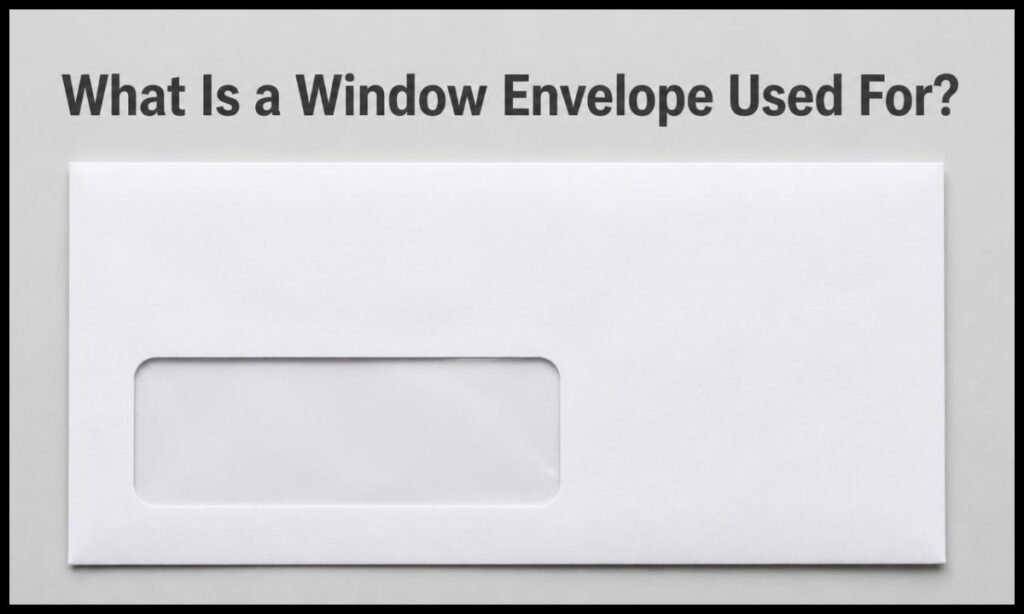
A window envelope is designed so that information printed on the enclosed document can be seen without separately writing or printing the recipient’s address on the outside.
This is particularly convenient for:
- Invoices
- Statements
- Bills
- Business letters
- Checks
- Reports
- Payment notices
- Official correspondence
- Promotional pieces
- Account documents
A business can print one address block on its letter template and then use the same document inside a compatible window envelopes system. It saves time, reduces duplicate work and makes high-volume correspondence easier to manage.
There are also different types, including single-window envelope and double-window envelope designs. The latter may provide separate visible areas for different information, although the exact arrangement depends on the envelope manufacturer.
The window itself may contain a transparent envelope window, often made from a thin translucent plastic or similar window material. The material needs to be suitable for mailing and should remain clear enough for the address to be read.
Envelope Window Size and Postal Processing
Window positioning is not just about appearance. Postal systems depend on addresses being visible and readable.
When an envelope passes through automated sorting equipment, the address may be processed using optical character recognition, or OCR. Clear typography, adequate contrast and correct address positioning can all help machine-readable mail move through the system.
Depending on the country and postal service, addresses may also interact with barcodes, postal codes or other machine-readable markings. In the United States, for example, USPS requirements can differ from European conventions, so a European DL layout should not automatically be treated as a universal US mailing template.
The important lesson is rather boring but useful: postal standards are not identical everywhere.
If you’re mailing internationally, verify the relevant postal services, address formatting rules and machine-readable zones before committing to a large envelope printing project.
Printing a DL Envelope and Its Address
Printing directly onto envelopes can be convenient, but it introduces a few practical issues that ordinary paper does not have.
An inkjet printer can produce attractive envelope printing, but ink may react differently to coated or textured envelope paper. Some inks can also be more susceptible to moisture, depending on the formulation.
A laser printer behaves differently because it uses heat during the printing process. When printing on a DL window envelope, check that the window material is rated for the printer’s operating conditions. Some plastics are not designed to pass through heated printer paths.
There is also the question of printer feeding. DL envelopes can sometimes enter a printer slightly crooked, particularly when the paper guides are not adjusted correctly. A tiny angle at the beginning can become a surprisingly obvious misalignment by the time the envelope reaches the other side.
For repeated jobs, make a few test prints first. Check the address, window alignment, ink or toner quality and envelope condition before starting the full batch.
Creating a DL Envelope Window Template
A DL envelope window template can make repeated design work considerably easier. Your template should contain the envelope dimensions, window boundaries, safe margins and any areas that should remain free of important artwork.
A basic template can include:
- The DL envelope size
- The envelope width and height
- Window width and height
- Left and top or bottom offsets
- Flap and seal areas
- Address zone
- Logo area
- Return-address area
- Printable address area
- Postal barcode or marking zone where applicable
For a UK-style design, you could begin with the commonly used 93 × 39 mm window and the approximate 20 mm from left and 53 mm from top placement. Then compare those measurements against the physical envelope supplied by your printer or stationery vendor.
Software such as Swift Publisher and other page-layout applications can be used to create envelope designs and printing templates. The particular software matters less than maintaining accurate measurements.
The template should also be saved at its actual physical size. Scaling a template accidentally when printing can turn a carefully measured layout into something that is just slightly, annoyingly wrong.
DL Envelope Address Window and Typography
Typography plays a quiet but important role in a window envelope.
An address should be easy to read through the window, both for a human recipient and, where applicable, automated postal equipment. Simple fonts such as Arial or Helvetica are often practical choices for business correspondence.
A 12-point font can provide comfortable readability, although the appropriate size depends on the address format and the available window space. Avoid squeezing a long address into a tiny block merely because the template says the window is a certain size.
Keep the recipient’s name, street information, locality and postal code or ZIP code organized clearly. Consistent address formatting is especially useful when many envelopes are generated from a database.
The goal isn’t to make the address artistic. It is to make it obvious.
DL Envelope Construction and Window Materials
The envelope construction can influence how useful a particular window specification is. An envelope consists of several folded sections that become the body, flap and opening, with adhesive areas holding the structure together.
Different manufacturers use different papers and window material. Some windows are made with translucent plastic film, while others may use alternative materials designed for postal handling.
The window must remain securely attached to the envelope body. A loose or poorly sealed window can cause problems during handling, while an overly reflective surface may make the printed address harder to read.
If you’re ordering custom window envelopes, ask the supplier for a physical sample whenever possible. Specifications written in a catalogue are useful, but actually holding the envelope reveals details that measurements alone dont show.
DL Envelope Window Size and Position: Common Mistakes
One of the most common mistakes is assuming that every DL envelope uses exactly the same window.
The format may be standardized broadly, but manufacturers and regional conventions can differ. A DL window envelope from one supplier may not match another supplier’s window dimensions or placement perfectly.
Another mistake is measuring from the wrong reference point. Always identify whether a specification means the distance from the left edge, top edge, or bottom edge. A measurement such as 20 mm is meaningless without knowing what it is measured from.
Other frequent problems include:
- Confusing envelope width with envelope height
- Using a UK layout for a German envelope
- Forgetting the fold positions of the A4 sheet
- Printing without testing a physical sample
- Scaling the template during printing
- Placing the address too close to the window edge
- Ignoring printer feed alignment
- Assuming all window materials tolerate laser printing
- Designing around a theoretical template instead of the actual envelope
Most of these mistakes are easy to prevent. Measure first, test second and print hundreds only after the physical result looks right.
DL Envelope Size Compared With Other European Envelopes
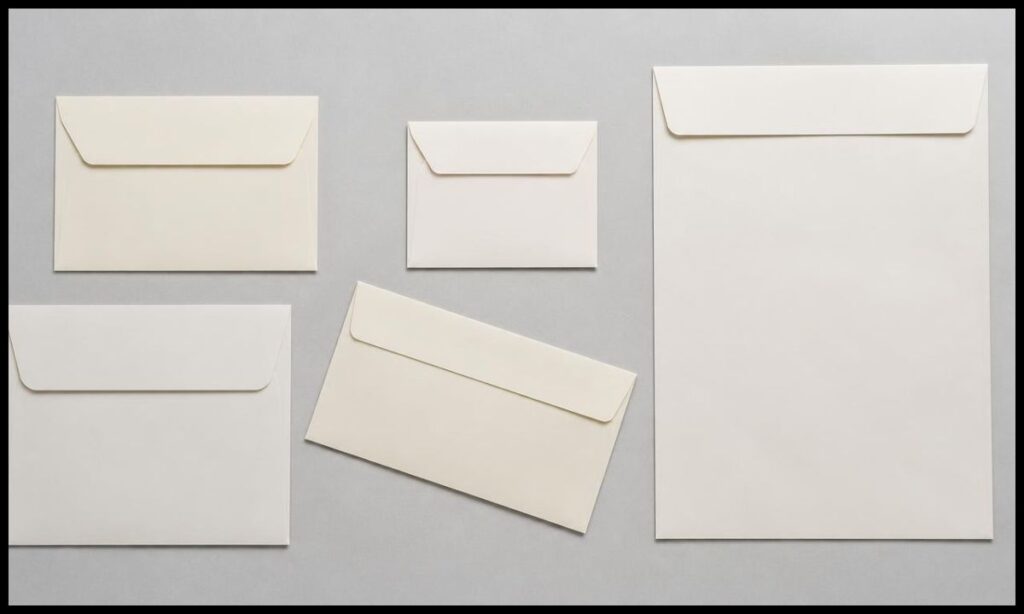
The DL envelope belongs to a broader family of European envelope sizes. You may encounter C-series formats such as C3, C4, C5, C6, C7, and C7/6, along with B-series formats including B4, B5, and B6.
These sizes exist for different document formats and folding arrangements. A C4 envelope, for example, can accommodate an A4 sheet without folding, while a C5 envelope can suit an A5 sheet or folded A4 document.
The DL format is distinctive because its long, narrow shape works naturally with an A4 sheet folded into thirds. This makes it particularly familiar in office mail.
Understanding the wider envelope sizes system is helpful when selecting stationery, but the window measurements must still be checked for each specific envelope. Similar-looking envelopes are not necessarily interchangeable.
Choosing Between Window and Non-Window DL Envelopes
A standard DL envelope without a window gives you more freedom over the internal document layout because the address does not need to appear in a precise physical location.
A DL window envelope, however, can make recurring business correspondence more efficient. You can generate the recipient’s address directly within the letter and let the envelope display it automatically.
For occasional personal letters, either style can work. For invoices, statements and repeated office correspondence, the window format can reduce manual addressing.
The choice also depends on branding. A company may prefer a clean printed envelope with its own address and visual identity, while another organization may value the speed of automatically generated window addressing.
Neither design needs to be complicated. The best envelope is usually the one that quietly does its job without asking anyone to fight with it.
A Practical Way to Check Your DL Envelope Window Measurements
Before preparing a final DL envelope printing template, take one physical envelope and a blank A4 sheet.
Print a test address on the sheet, fold it exactly as intended and insert it into the envelope. Look through the window and check the entire address.
Pay particular attention to the top and bottom of the address block. If the recipient’s postal code is partly hidden, moving the entire address block by a few millimeters may solve the issue.
You can also measure the actual window using a ruler. Record the width, height, left offset and top or bottom offset, depending on the specification you’re working from.
This creates your own practical DL envelope window measurements, based on the stationery you’re actually using rather than relying entirely on a generic internet template.
Read more : Average Ring Size for Women
Frequently Asked Questions
What Is the Standard DL Envelope Size?
A standard DL envelope measures 110 × 220 mm (4 1/4 × 8 3/4 inches), making it ideal for an A4 sheet folded into thirds.
What Is the DL Envelope Window Size?
A commonly used UK DL envelope window measures approximately 93 × 39 mm, providing enough space to display a recipient’s address clearly.
Where Is the DL Envelope Window Positioned?
The typical UK DL envelope window position is about 20 mm from the left edge and 53 mm from the top edge of the envelope.
Why Does DL Envelope Window Position Matter?
Correct DL envelope window placement ensures the printed address lines up with the window and remains visible during mailing and postal processing.
Conclusion
The DL envelope window size and position may seem like a tiny technical detail, but it sits at the meeting point of document design, printing, folding and postal handling. Get those pieces working together and the whole mailing process becomes wonderfully uneventful.
For the familiar DL format, remember the basic envelope dimensions of 110 × 220 mm, or roughly 4 1/4 × 8 3/4 inches. A commonly referenced UK-style window is around 93 × 39 mm, positioned approximately 20 mm from the left and 53 mm from the top. A German-style specification may instead use a 90 × 45 mm window positioned around 20 mm from the left edge and 15 mm from the bottom.
Those figures are useful starting points, not permission to skip the physical test. Manufacturers, regions, postal systems and envelope construction can all introduce small differences.
When accuracy matters, measure the actual envelope, create the DL envelope layout around those measurements, test the folded document and only then begin the full printing run.
A little rectangle on an envelope doesn’t look important. But when that rectangle reveals exactly the right address, at exactly the right moment, it becomes one of those small pieces of design that simply works and thats really the nicest kind of design there is.